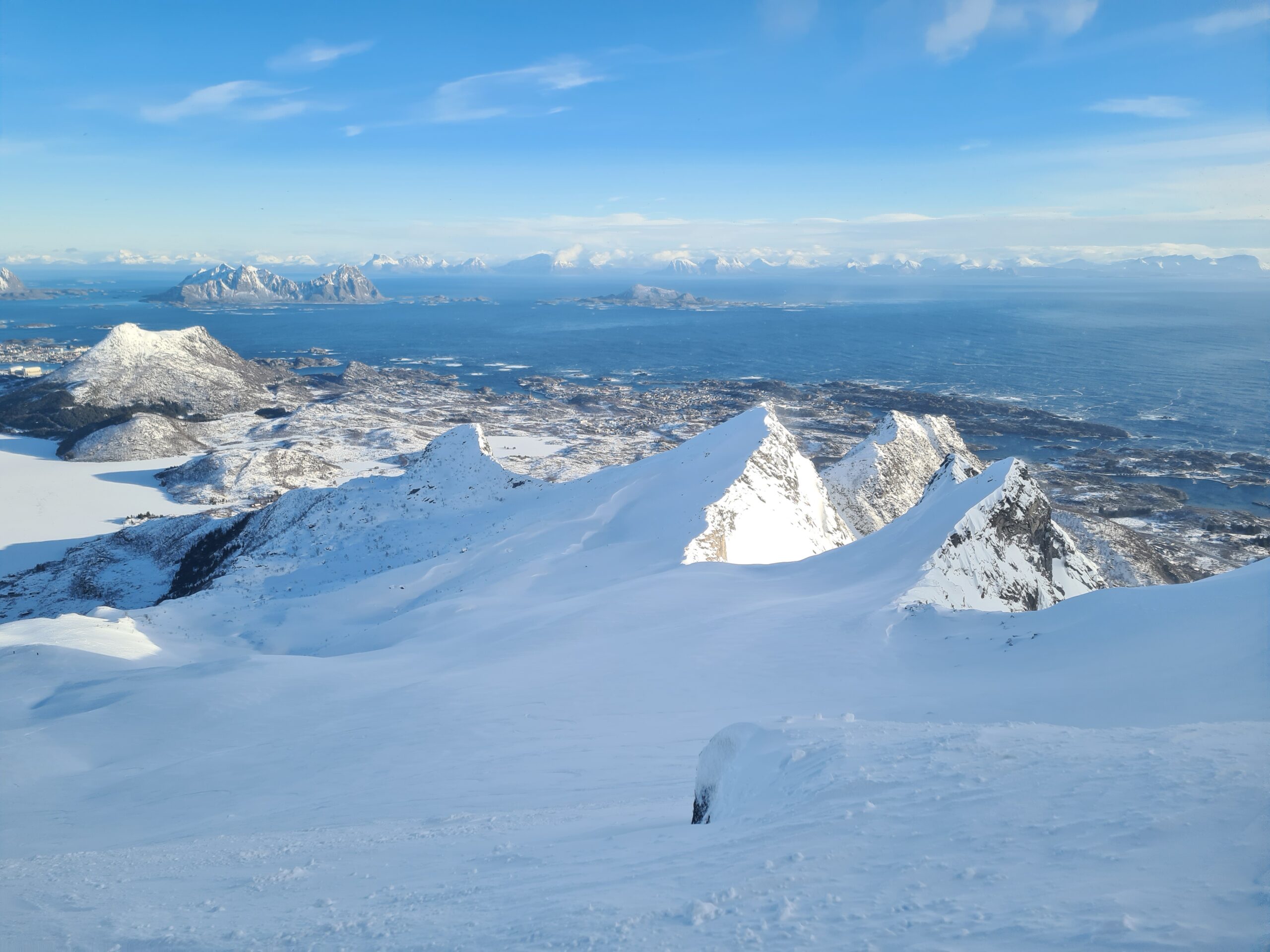

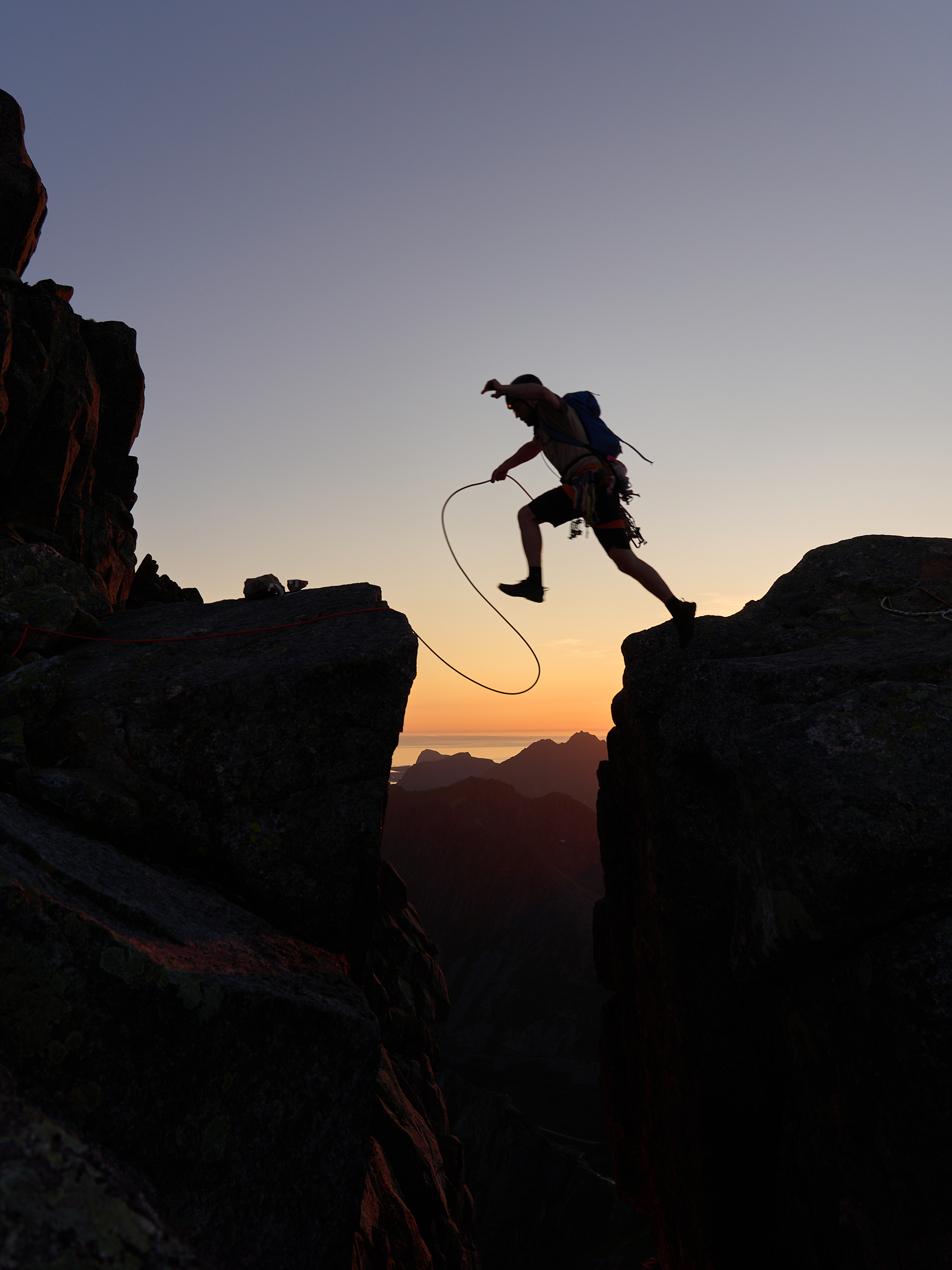
Lofoten is an absolute must-visit destination for any avid climber—the midnight sun, breathtaking views, easy approaches, and pristine granite are just a few of the reasons to add this destination to your bucket list.
Traditional Climbing in Lofoten
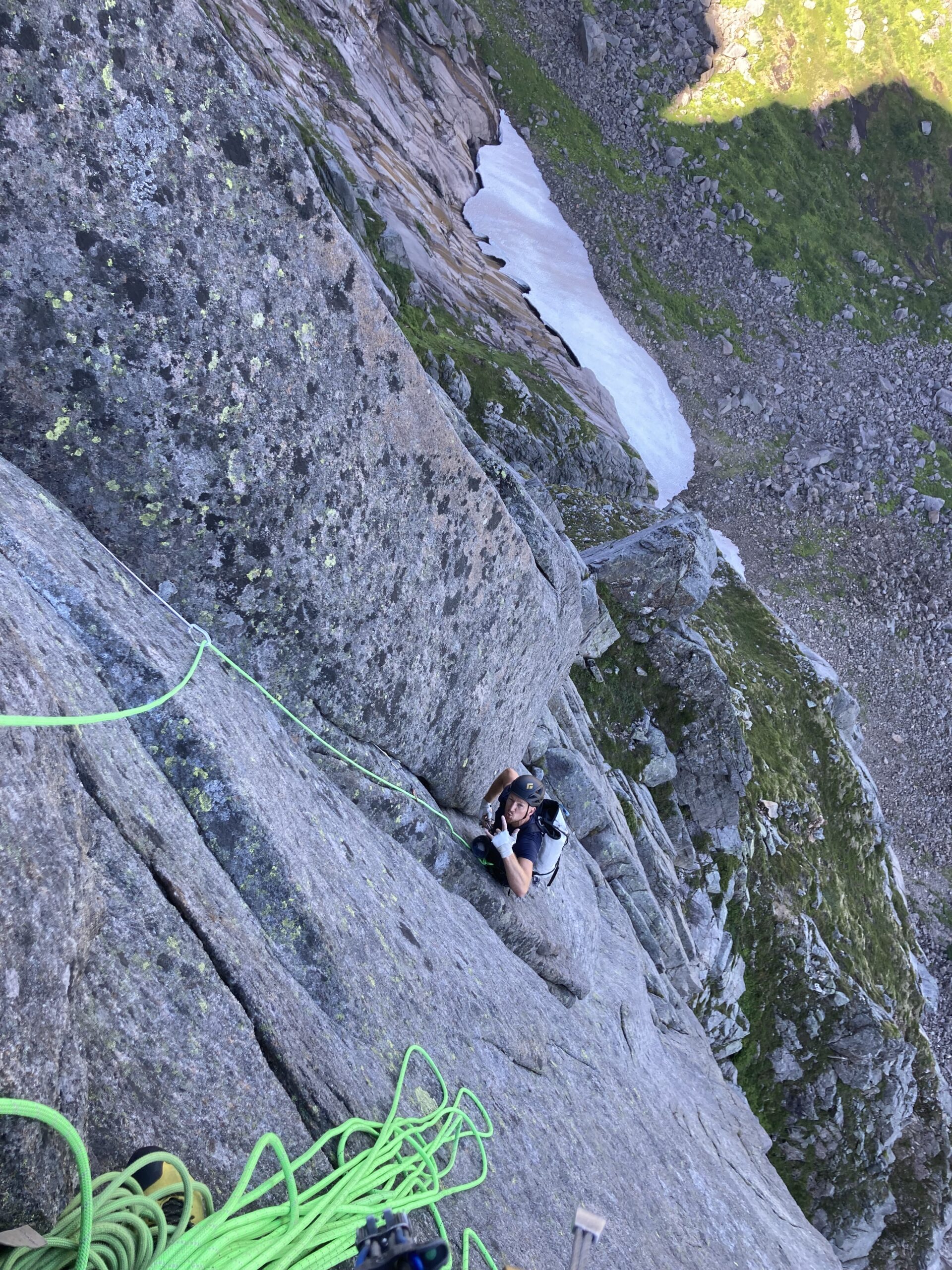
On the Lofoten Islands, there is a huge selection of top-quality granite trad climbs to choose from in the summer, ranging from a wide variety of routes right off the road to alpine adventures a little further from the road.
Route lengths range from 1 to 17 pitches, and grades range from N3 to N9. The trad climbing here is accessible and often very well protected. Expect to climb cracks, slabs, and corners with excellent friction and good protection. It’s a good idea to pack a double rack of cams and bring two ropes to make it easier to get down. It’s possible to have some epic days out here, sometimes lasting 24 hours—in a place where it never gets dark, the only limit is your endurance!
Most of the classic routes are located on Austvagøy between Svolvær and Henningsvær, and about 90% of the most popular climbing is along the Henningsvær road. There are also many more routes to be found further west, with some absolute classics situated in the dramatic mountains of Moskenes. This area is generally more challenging, with longer runouts, more loose rock, and some vegetation.
For those seeking adventure, it’s possible to get away from the crowds and off the beaten path. There are definitely new routes waiting to be climbed, but be warned—the rock quality on unestablished cliffs can vary wildly, so don’t be lulled into a false sense of security by the relative safety of the classic routes: mishaps and epic adventures are definitely possible!
✪ TRAD CLIMBING AREAS
- Gandalf Wall –Henningsvær Road (68.1735, 14.2155)
- Pianokrakken – Henningsvær Road (68.1902, 14.2223)
- Festvåg –Henningsvær Road (68.1740, 14.2222)
- Råna – Svolvær (68.2479, 14.6271)
- Paradise – Kalle (68.1810, 14.3248)
Sport Climbing in Lofoten
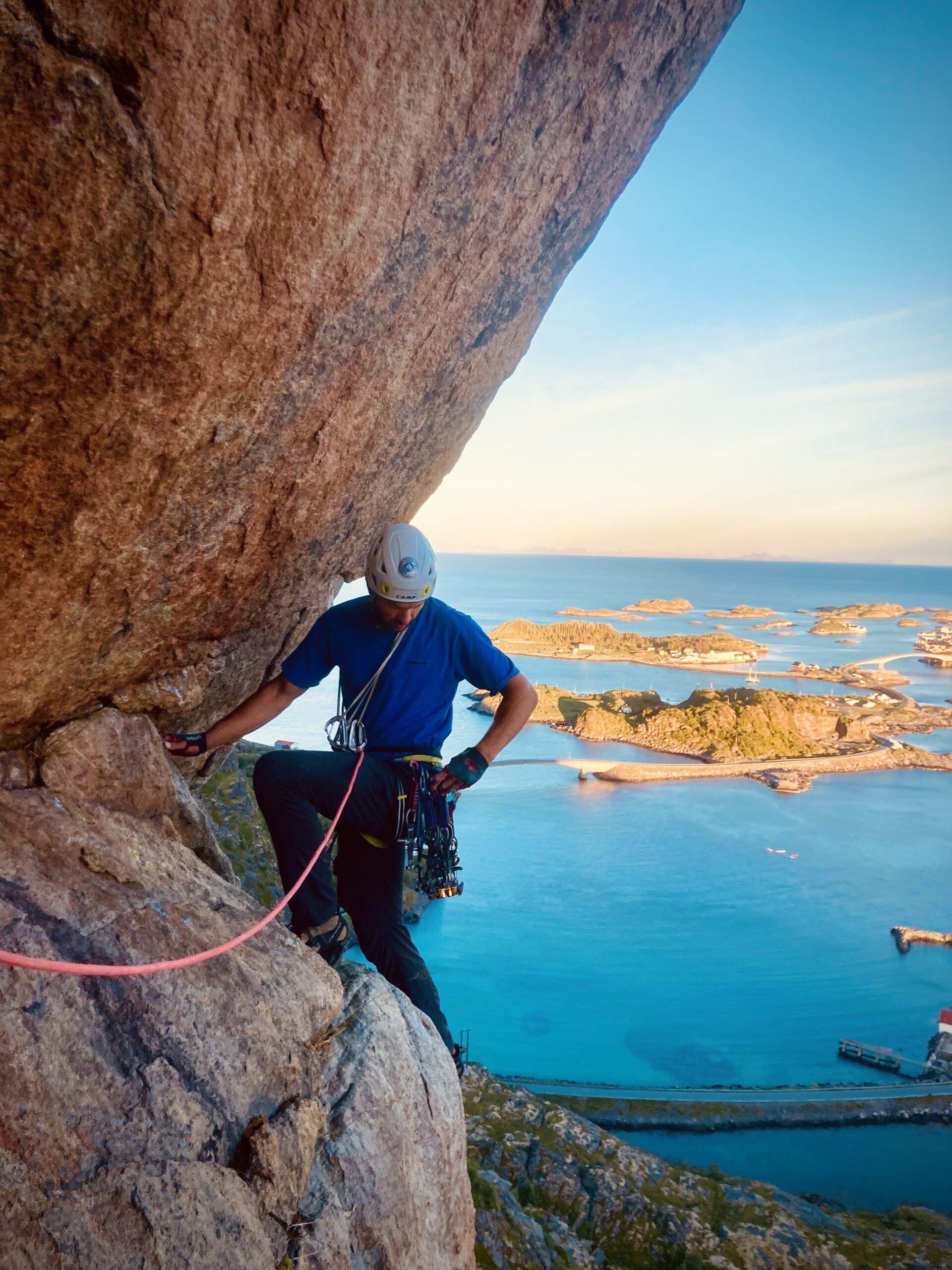
For those interested in sport climbing, we have several sport crags on the islands. On Austvagøy, between Kabelvåg and Svolvær, you’ll find a few accessible granite sport crags that are mostly slab-like. These cliffs dry quickly, get plenty of sun, and are right next to the ocean—perfect for a lunchtime dip to cool off!
On Vestvagøy, we have Eggum —a steep and arguably world-class sport crag with a variety of routes ranging from grades 6a to 8b. This crag is especially awesome because most of it stays dry all year round, even in the harshest weather conditions! Get ready to get pumped on steep jugs and slopers, and baffled by the unique and technical nature of the granite here. During peak season, quickdraws are often left in the classic routes by the local climbers, so it’s almost as convenient as climbing indoors!
We also have two small but interesting indoor climbing walls run by Vest-Lofoten Klatreklubb and Lofoten Tindeklubb —perfect for those rainy days (rain? what rain?!).
✪ SPORTS CLIMBING AREAS
- Finnvika – Between Svolvær and Kabelvåg (68.2223, 14.5259)
- Ursvika – Between Svolvær and Kabelvåg (68.2196, 14.5096)
- Juniorveggen – Henningsvær (68.1697, 14.2264)
- Eggum – Just west of the small harbor in Eggum (68.2979, 13.7070)
- Stamsund – A short distance from the village of Stamsund (68.1233, 13.8289)
Bouldering in Lofoten
Bouldering is also a major attraction on the islands, and current development has only just scratched the surface. The islands are absolutely littered with boulders, and new routes are constantly being added. Here you’ll find pristine granite boulders right next to the ocean, as well as relatively easy-to-access mountain boulders offering stunning views in dramatic landscapes. Information on bouldering can be found in the *Bouldering in Lofoten* guidebook.
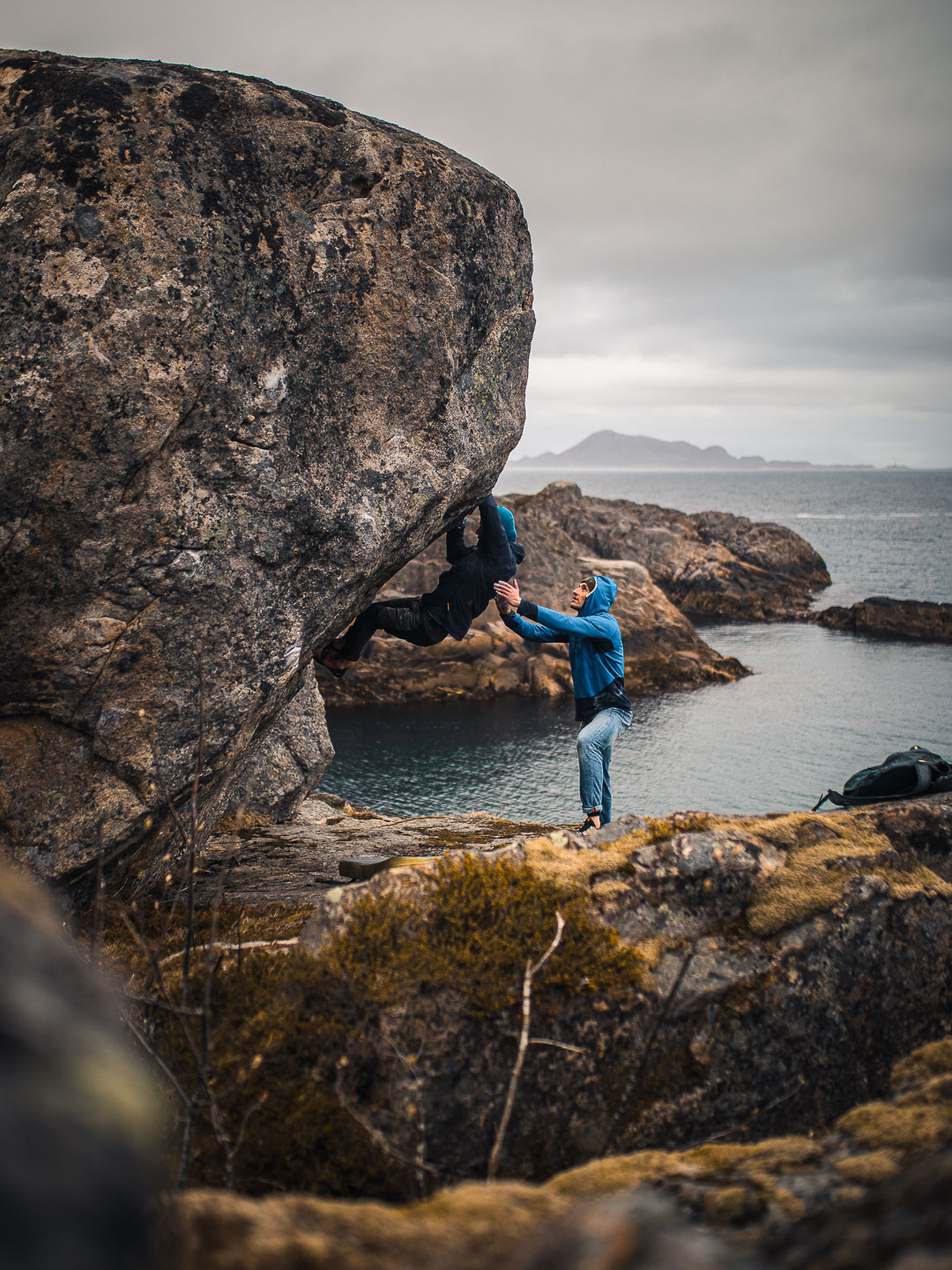
✪ BOULDERING AREAS
- Basically everywhere in Lofoten
- Presten Boulders – Henningsvær Road (68.1759, 14.2074)
- Brenna – Lots of boulders along the road leading to Brenna (68.3243, 14.3188)
- Lyngen – Several classic routes along the E10 (68.2133, 14.2200)
- Smorten – Just west of Gimsøy (68.2596, 14.1674)
Winter/Alpine Climbing in Lofoten
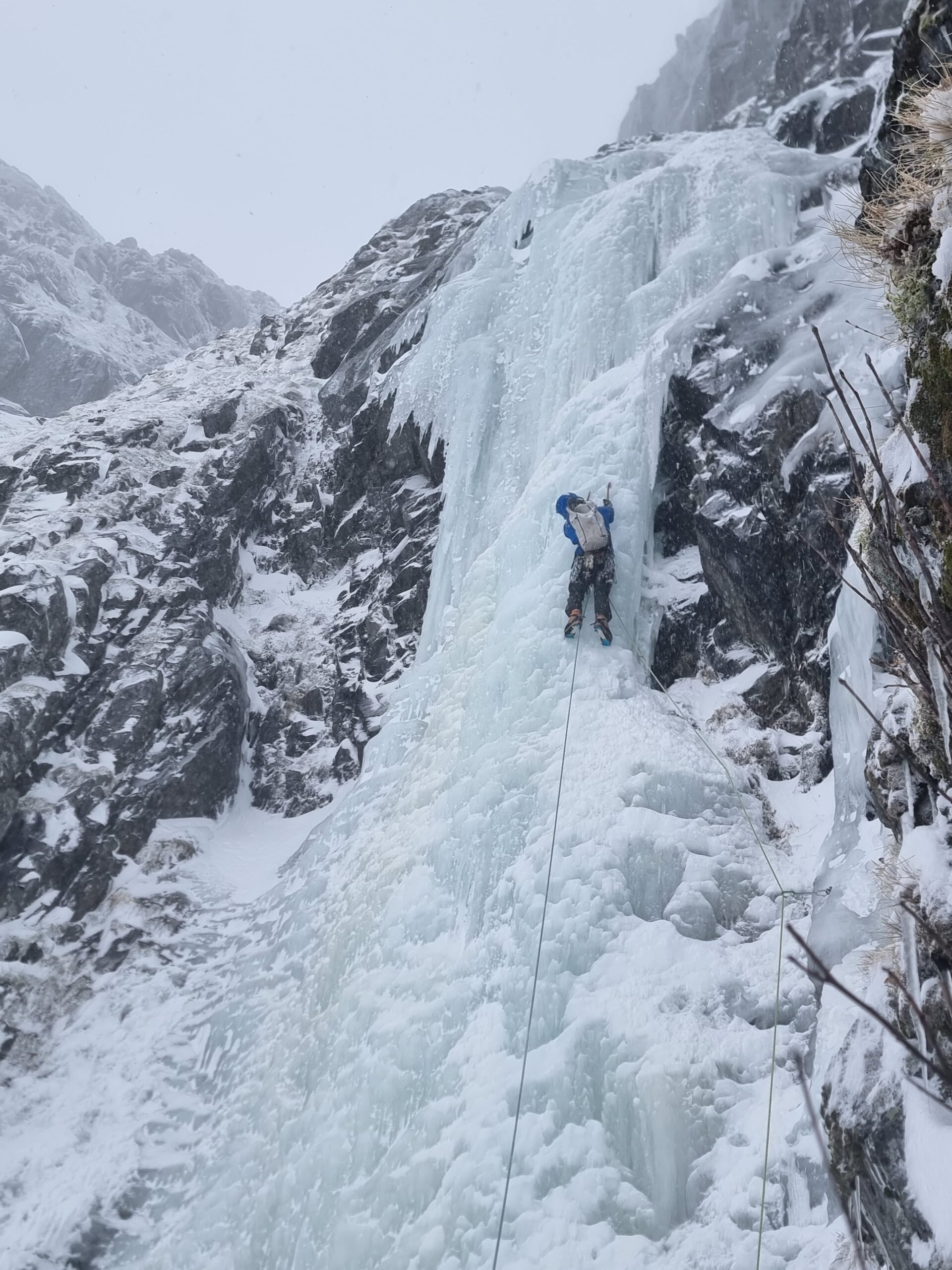
Winter in Lofoten is a wild experience, with ever-changing weather, fluctuating temperatures, and long, dark polar nights early in the season. Winter climbing on the islands therefore relies on a combination of local knowledge, good timing, and luck. The winter routes are generally not located on the same cliffs as the summer routes.
Due to the fluctuating conditions, “hero ice” is a very rare find in Lofoten, and the rock on winter routes can be difficult to protect. In winter, you’ll often find yourself running it out over poor protection on semi-frozen turf, or placing many less-than-ideal ice screws. Despite this, a good number of winter Alpine routes have been established across the islands over the years. And every now and then, the stars align to create patches of blue ice all over the hills.
If you come to Lofoten for winter climbing, prepare for adventure, and expect the unexpected: it won’t be handed to you on a silver platter, but the reward can be massive! There’s something particularly special about swinging ice axes with a beach below and the Northern Lights swirling overhead, and wherever you choose to climb, you’re almost guaranteed to be the only team on the route.
Information on winter climbing in Lofoten is hard to come by, and we like to keep it that way, but if you’re eager to learn more, we’d love to meet you and share some local tips. Just stop by Retur for a coffee, and we can answer all your questions and give you some solid recommendations. We’ll even tell you where the local bolted drytooling crag is 😉
When to Visit
For rock climbing, the best time to visit is between May and September. Given the wide variations in conditions, it’s a good idea to plan a long trip to account for the almost inevitable days of bad weather.
The best time to take a chance on a winter climbing trip to Lofoten is late November through early March. Be prepared to be flexible and expect the unexpected!
Where to Stay
There is a wide variety of accommodations in Lofoten to suit every taste and budget. For climbers visiting in the summer, it’s a good idea to base yourself around Svolvær, Kabelvæg, or Henningsvær—with Henningsvær being the closest to the main climbing action! Henningsvær is a small town with plenty to do, so if you’re looking for a place to stay here, it’s a very good idea to book in advance. Those booking on short notice will find it easier to find a place to stay further away from Henningsvær. Camping is also a good option, and there are a number of good campgrounds available on the islands. Wild camping is a common practice among visiting climbers. Be sure to read up on Allemansretten (the Norwegian right-to-roam), which allows for this—there are some important rules and principles you must follow when choosing to camp in the wild. As with any natural area, leaving no trace is essential—respecting the land, nature, and the local community not only ensures that the islands’ beauty is preserved, but also helps keep access open for everyone.
For those visiting in winter, finding accommodations is typically easier. Any of the locations mentioned above are a good place to start 🙂
If you've made it this far, you're obviously interested in visiting these beautiful islands—we warmly invite you to stop by and enjoy the unique experience of climbing in Lofoten, and we hope to see you soon!
✪ OUR FAVORITE PLACE TO STAY
- A good old-fashioned tent!
- Skårungen – Kabelvåg
- Furu Hostel – Bøstad
More information
For detailed information about rock climbing in Lofoten, you can either download the Rockfax app or purchase one of the local climbing guidebooks. We, of course, invite you to visit our shop in Svolvær, where you can get some great local insights from our friendly and exceptionally enthusiastic staff. We sell everything you need for your climbing trip and even rent out crash pads—and best of all, our coffee is free 😉
LOCAL GUIDEBOOKS
Need a helmet or a crash pad?
We've got you covered!